
As Flying Taxis Approach, Cities Are Making Room
Electric vehicles that offer ‘advanced air mobility’ have promised a transportation revolution for cities like LA and NYC. But plenty of tall hurdles loom.
Situated in Century City, one of the hottest development markets in Southern California, the 44-story Park Elm towers offer luxury condos, floor-to-ceiling views and Los Angeles living starting at $2.6 million. A penthouse unit lists for north of $78 million — an “estate in the sky,” said Jordana Yechiel, director of residential design for Reuben Brothers Group, the developers.
One amenity that helped push that price above the clouds: a vertiport.
Thanks to a joint deal with aircraft developer Joby Aviation and its subsidiary Blade Air Mobility, an existing heliport on the Park Elm’s south tower is set to be converted into a landing pad for electric vertical takeoff and landing craft, or eVTOLs; the promise is that residents will be able to use these nextgeneration air mobility vehicles to whisk above the hoi polloi while visiting a web of exclusive landing sites from Malibu to SoFi stadium.
“This is for the buyer who likes that they can get from their private jet to the house and then to the Lakers game,” said Yechiel.
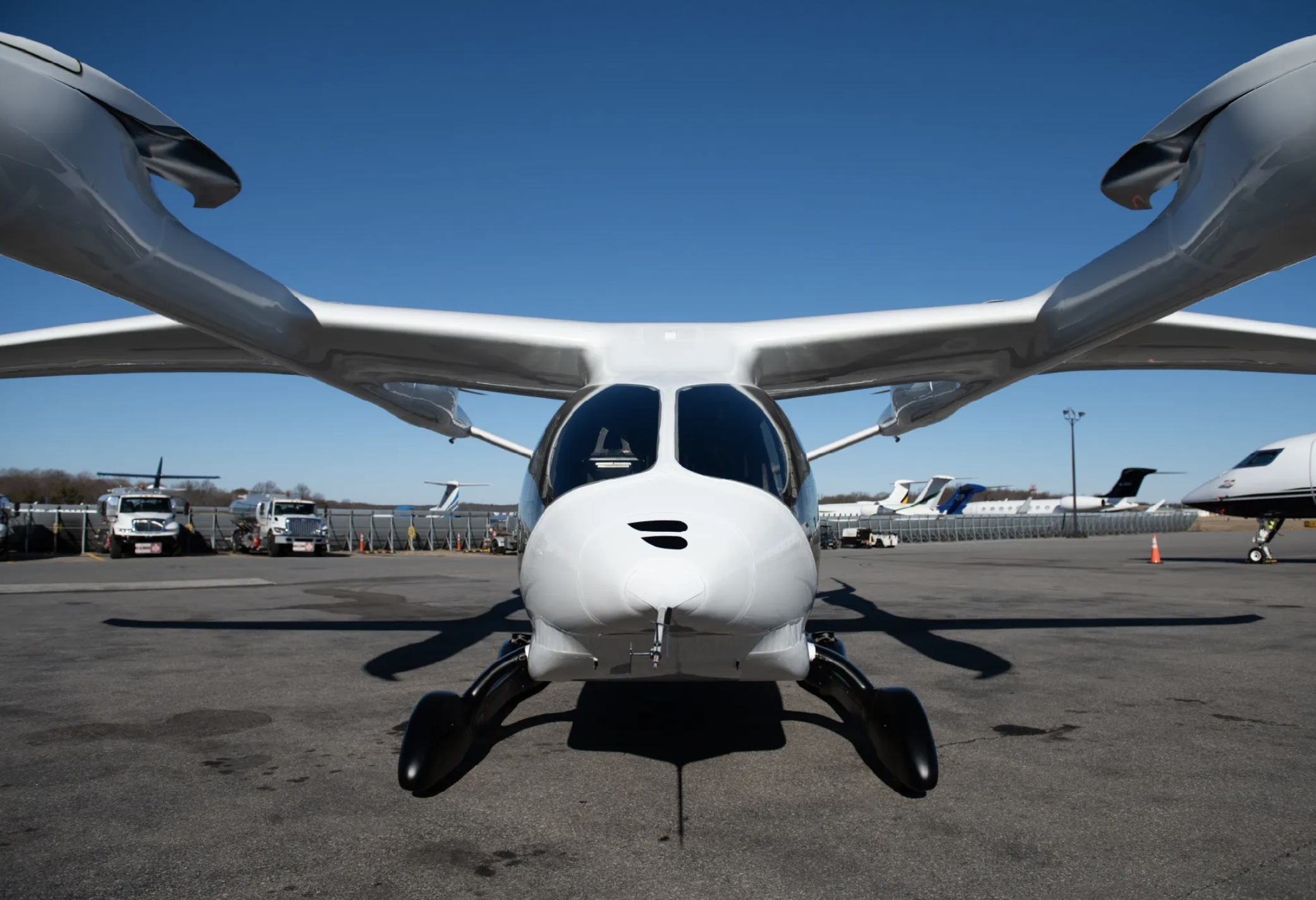
Officially, takeoff for eVTOLs is still years away — the most optimistic projections see certification from the Federal Aviation Administration coming in 2027 or 2028. But the Jetsons fantasy of the flying car, long an object of fascination for city residents who dream of vaulting over traffic-clogged highways, is creeping closer to reality. Companies like Joby, Archer Aviation and Beta Technologies are racing to develop small multi-rotor electric vehicle raising and spending billions of dollars in the pursuit of a Blade Runner-esque future — skylines ribboned with small, hovering aircraft.
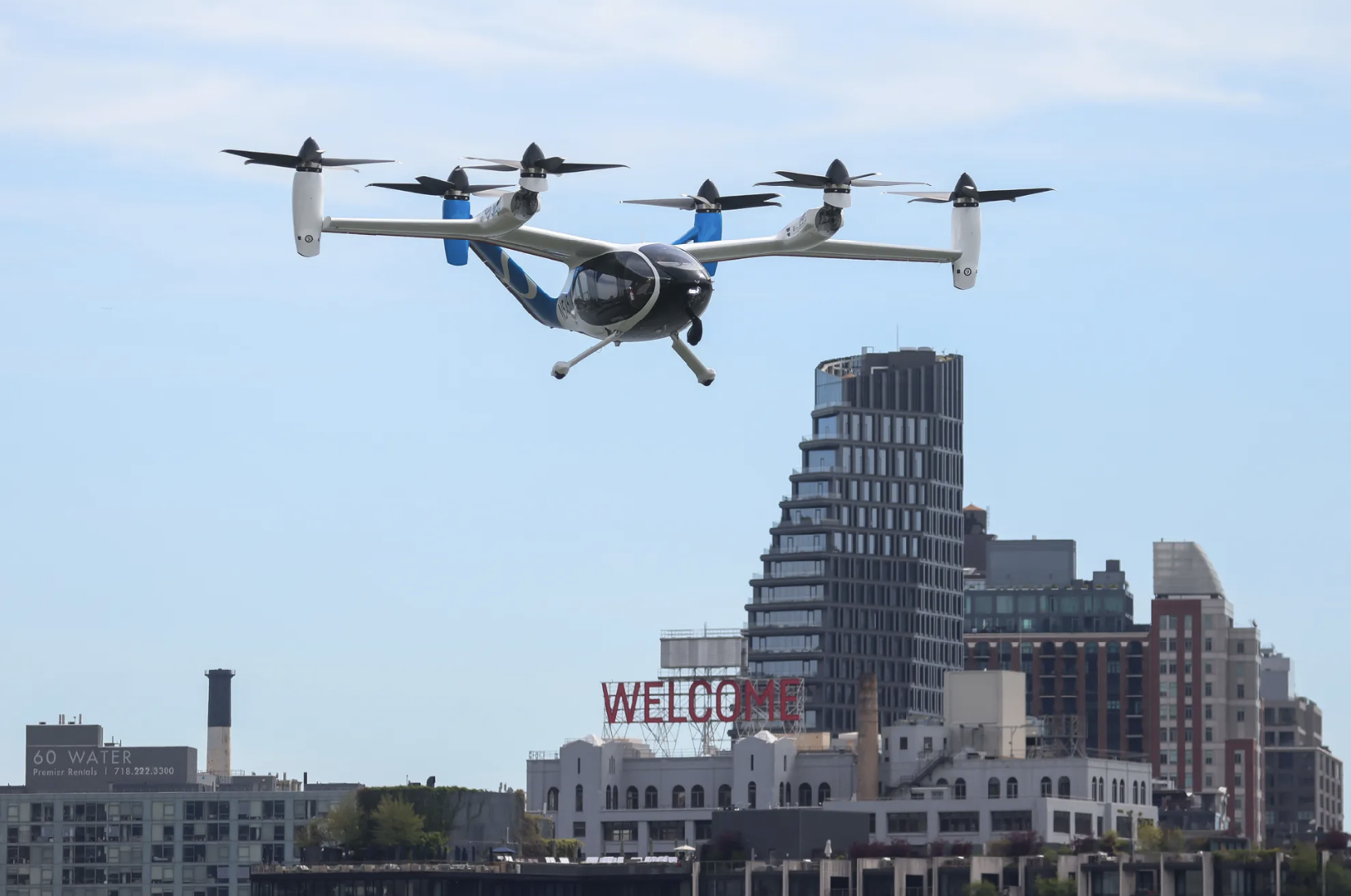
Prototype models are now undergoing real-world trials and testing. In April, for example, Joby performed a series of demonstration flights between Manhattan and JFK Airport in Queens — a highly desirable route for affluent New Yorkers.
“This is going to change the architecture of how people live and work, because of the level of efficiency you have,” said Rob Wiesenthal, founder and CEO of Blade, which will run the Park Elm site. The Century City rooftop vertiport w include electric charging and a lounge similar to spaces Blade is currently operating in the south of France and Manhattan for well-heeled passengers paying for private helicopter flights.
While eVTOLs prepare to gain the skies, the push to place vertiports and shape regulations and oversight of the nascent industry has already begun. “The electric aviation industry will be won on the ground,” said Kristen Costello, head of government and regulatory affairs at Beta Technologies.
Putting that infrastructure in place requires timing and coordination, said Bryan Bernhard, Archer’s chief growth and infrastructure officer. “The worst thing we can do is spend $100 million on vertiport infrastructure when the vehicles won’t be able to fly for a decade, and we also can’t bring 10 vehicles to market and have nowhere to land.”
But winning on the ground also means figuring out how to make urban air commuting financially feasible, broadly acceptable, and useful for more than the uber-rich — a feat that may be too lofty to easily overcome.
Hold for Takeoff
So, when exactly will we get our air taxis? It’s a familiar question. Almost a decade ago, ride-hailing giant Uber announced it would begin an aerial service called UberAir in LA and Dallas by 2020, releasing flashy white papers and hosting conferences. But instead of taking flight in 2020, Uber sold its Elevate division to Joby that year.
Going further back, eVTOLs can be seen as just the newest twist on the century-old dream of a personal aircraft that could bring aviation to the masses. In the 1920s, automaker Ford attempted to make a prop-driven “sky car”; postwar efforts to market a “roadable aircraft” include the Fulton Airphibian and the Taylor Aerocar. All proved too deadly or impractical. Even as the mode prospered in pop culture, the ongoing failure to deliver real-life flying cars has become a shorthand for a certain brand of techno-pessimism.
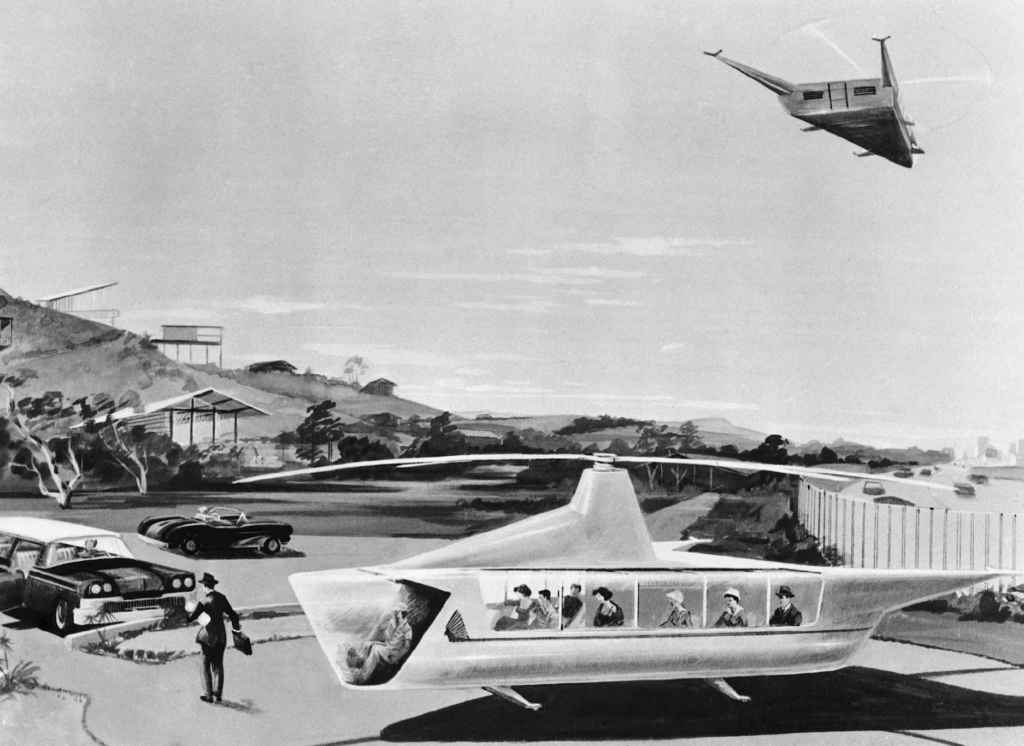
But recent advances in battery tech and the development of increasingly large and sophisticated flying drones have changed the conversation around what’s now often known as advanced air mobility — an emerging genre of small electric aircraft that are quieter, less polluting and easier to fly than helicopters. Most have a range of roughly 100 miles; some promise to be capable of autonomous flight.
The Trump administration prioritized eVTOL testing in a 2025 executive order on “American drone dominance,” and in March, the Federal Aviation Administration launched its eVTOL Integration Pilot Program, or eIPP, which will run trials of advanced air mobility vehicles in eight locations, allowing startups to test safety, noise and other issues for these new vehicles as urban air taxis and in regional passenger flights. Longtime industry executive and analyst Mike Hirschberg sees the FAA pilot as the federal government “kicking the tires” on the concept.
Developers and investors aren’t waiting around for FAA certification: They’re already preparing eVTOL landing sites. Billionaire developer and Miami Dolphins owner Stephen Ross, for example, entered a partnership with Archer Aviation to site vertiports at properties like Hard Rock Stadium, part of a large proposed Miami-area vertiport network. Companies like VertiPorts by Atlantic are also seeking to develop national networks.
If you’re asking wealthy buyers to invest in a home far from the city center, a flying taxi could certainly make a daunting commute more bearable. The backers of California Forever, the proposed mega-development being pitched by tech execs for a site between San Francisco and Sacramento, say that electric aircraft would turn an 80-minute car trip to Silicon Valley into a 10-minute hop.
Much of the industry’s energy is focused on California, home of several aircraft makers. Archer recently purchased the master lease of Hawthorne Airport, located in Los Angeles County a few miles from SoFi Stadium and LAX, with plans to transform it into the “airport of the future” and the center of a network of a dozen landing sites across the LA region.
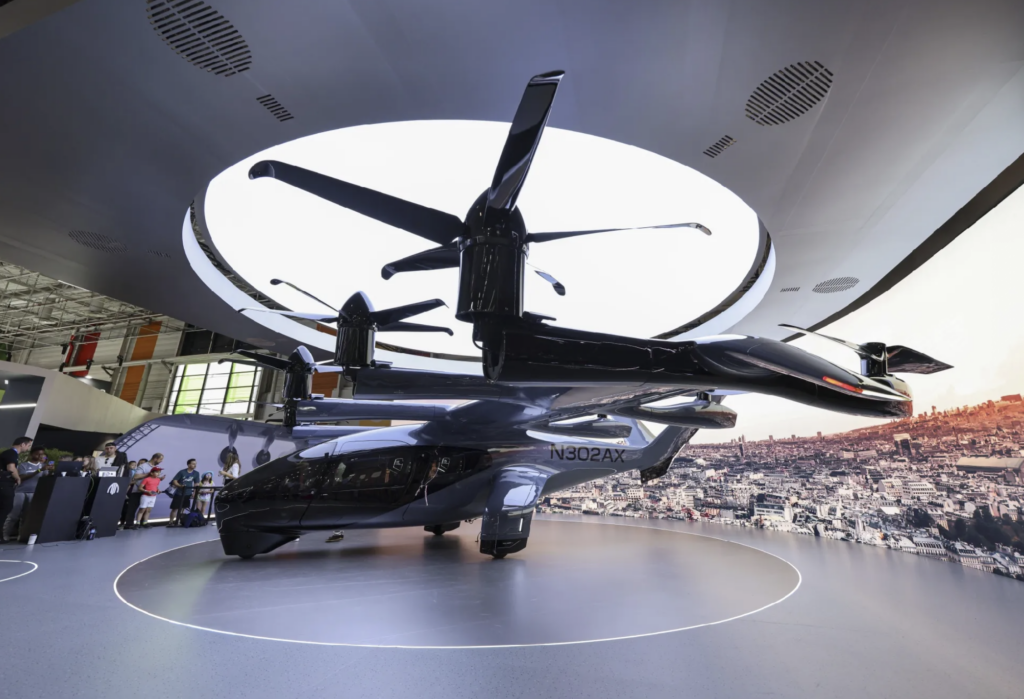
Last year, Archer was named the “official air taxi provider” of the 2028 Olympics — a distinction that will hinge on FAA approval. CEO Adam Goldstein compares their plans to the “jetpack man” who landed on the field during the 1984 LA Olympics’ Opening Ceremony. “There’s an ability for us to go show this off, our hope is to leave a good impression on the world that this is a new category of vehicles that we can show off in whatever capabilities we’re allowed.”
The word vertiport may conjure visions of space-age travel hubs — and some starchitects have tried their hand at concept drawings — but the reality is likely to be more pedestrian, at least initially. Archer and other firms believe they’ll quickly be able to scale up urban air mobility by utilizing existing airports — the US has thousands of underutilized small and rural airstrips — and helipads.
Los Angeles is ahead of the game here, thanks to 1970s building codes that mandated helipads on tall buildings as a fire safety measure. LA’s leaders have also been historically pro-flying-taxi: In 2020, the city’s transportation department launched the Urban Air Mobility Partnership, an effort to get ahead of the technology and figure out property rights, policies and public airspace issues.
Current regulations consider eVTOLs to be helicopters when it comes to flight routes, which the FAA oversees. That means they could only utilize existing routes, airspace and landing sites approved for helicopters. (We will not all be commuting from our backyards, in other words.) To host battery-powered aircraft, helipads will need to be fitted with electric charging equipment.
Goldstein sees it as a slam dunk: Noisy helicopters will get replaced by quieter eVTOLs, which can gradually take over existing helicopter routes, providing a safer, cleaner and ultimately cheaper version of what’s already being flown today.
Ups and Downs
But bringing squadrons of flying taxis to cities might not be that straightforward.
For one thing, most helipads are in private hands and are hard to access; Hirschberg said that many don’t fully comply with existing FAA design guidelines and never did. (In general, the FAA regulates the airspace, but leaves it up to state and local governments to determine how and to what extent they wish to control and regulate the ground infrastructure.) Building new ones is onerous, given the fire regulations, zoning issues and special permits required. (Donald Trump, onetime owner of a failed helicopter shuttle service, recently spoke to this issue. “The hardest thing to get is a helipad,” said the president, who is currently overseeing the construction of a helipad on the White House lawn. “There’s no harder zoning thing to get, and I had, like, seven of them.”
Many industry proponents see the eVTOL network growing around airports, with quick jumps from city to terminal as easy sells. But when San Francisco International Airport finished an urban air mobility study earlier this year, it concluded that its helipads are too far from the terminal, and it would be hard to find a closer place to land eVTOLs because of air traffic interference. Airport spokesperson Doug Yakel said it simply doesn’t yet add up; the charging infrastructure, cost and challenge of operations would be “a lot of work to serve a small population.”
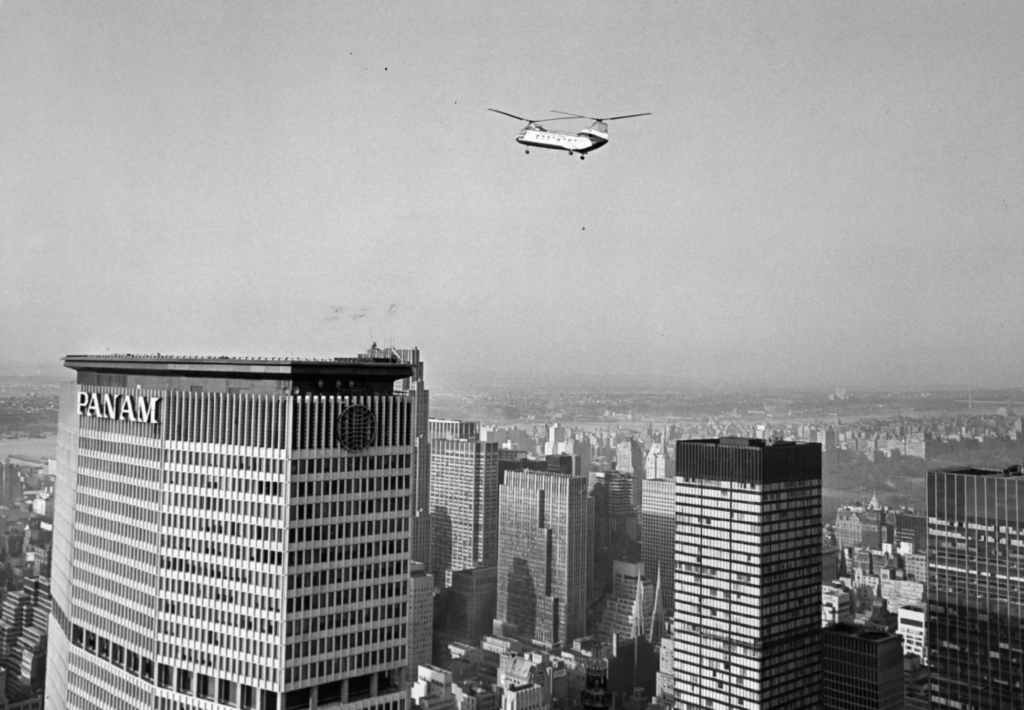
The brief and bumpy history of urban air commuting is full of similar conclusions. Back in the 1960s and ’70s, New York, San Francisco and Los Angeles had regular helicopter passenger service. But crashes, costs, noise issues and other complications killed off the chopper-based companies.
One particularly deadly incident vividly displayed the fundamental dangers of using urban rooftops at landing sites. New York Airways, a helicopter airline, offered shuttles from the Pan-Am Building in Midtown Manhattan to JFK Airport; rides took about seven minutes. But in May 1977, a New York Airways helicopter keeled over, launching blades and shrapnel into waiting passengers. Among the five people killed was a pedestrian 60 stories below.
That was the end of rooftop helicopter service in New York City. Since then, the market has been limited to private charter companies like Blade, which currently charges $195 per person or more to take riders from waterfront helipads in Manhattan to airports or the Hamptons. Still, safety remains a concern, especially after a pair of high-profile 2025 crashes involving urban chopper flights — a tourist helicopter that broke up over the Hudson River and a military helicopter that brought down an airliner over Washington, DC.
Volume Problems
Predictions that eVTOLs are poised to reshape urban mobility face another very basic issue: While promoters often say that flying taxis can ease terrestrial traffic in megacities like Dubai, small four-passenger vehicles are no match for traditional buses or trains when it comes to moving people en masse at a reasonable cost. And integrating them into the existing transportation infrastructure will be difficult.
“Helicopter travel today is not seamless by any stretch of the imagination,” said Seth Wainer, director of planning and innovation at the Port Authority of New York and New Jersey, which hosted a test flight by Joby in April and will run an eIPP pilot. “If air taxis and eVTOLs evolve on the exact same infrastructure, it’s not going to be particularly easy to get there, because helicopters are very, very, very low volume.”
For reference, Blade said that it transported roughly 100,000 people last year via its routes in New York City and South Europe. That’s one-sixth of the number of people who pass through Penn Station every day.
Still, eVTOLs could find a niche in New York City. The Port Authority, which oversees the region’s airports, is deep into research and evaluation of advanced air mobility. New York City opened a middle-mile drone corridor in April to test deliveries and moving goods between hospitals in Brooklyn and Manhattan, and the Port Authority expressed interest in developing a vertiport at LaGuardia Airport. Wainer leans toward routes that could expand the existing network, like ferrying people to airports from the Port Authority terminal. If you squint, he said, you can see a future where a cheaper, quieter, safer helicopter could be a useful addition to the city’s mobility ecosystem.
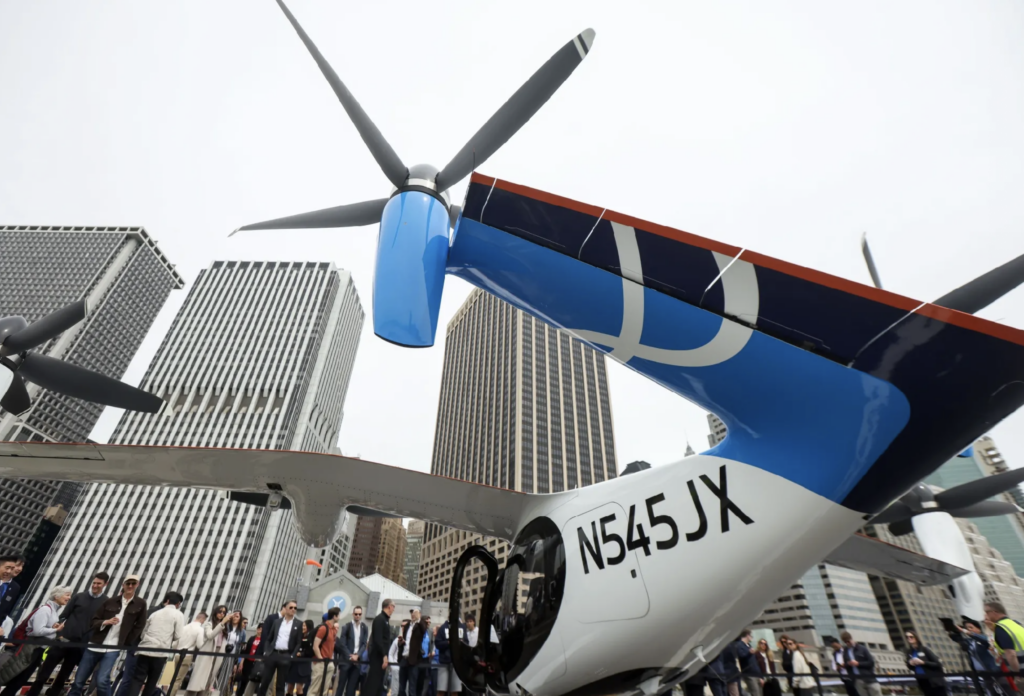
Other complications include noise and environmental effects. The recent surge in commercial helicopter flights in the New York area brought record citizen complaints, with lawmakers pursuing tighter regulations and flight bans to silence their din. Battery-powered eVTOLs are expected to be quieter than helicopters with piston or turbine engines; their multi-rotor designs were often engineered to produce less noise. NASA staff recorded not just lower decibels but less annoying tonal sounds from a Joby aircraft during a 2021 test. But questions remain, especially if large numbers of air taxis take to the skies.
“There are a lot of unknowns and there are a lot of variables that can affect the level of annoyance or acceptance by the community,” said Richard Root, who led unsuccessful campaigns against helicopter noise in Los Angeles. He said that the irritating quality of aviation noise is often undercounted. The FAA Neighborhood Environmental Survey, published in 2021, found that more people near airports were bothered at lower decibels than the FAA predicted. Nearly one in five was “highly annoyed” by sounds at 50 decibels, a level at which eVTOLs routinely operate, one that previous FAA regulations suggested offended almost nobody.
Darlene Yaplee, co-founder of the Aviation-Impacted Communities Alliance, said that what hasn’t been surveyed or researched is how residents will react when eVTOLs start running regular routes — especially above areas that didn’t previously have helicopter traffic.
The sound profiles of eVTOLs also differ from helicopters in key ways, according to NASA engineer Michael Patterson. Multiple rotors produce several overlapping tones rather than a single roar, a topic of ongoing research. NASA has conducted trials, called the VANGARD tests, that found urban residents were more annoyed than rural residents by the unfamiliar whine of eVTOLs.
Most local governments don’t have great ordinances on the books for helicopters, and will need to update their rules for eVTOLs, especially when it comes to siting vertiports, said Rex Alexander, a helicopter and vertiport infrastructure expert. Along with noise issues, landing and takeoffs also produce downwash — blasts of air from rotors on takeoff and landing. New electric aircraft with multiple rotors will create different types of downwash that pad designers will need to take into account. Fire suppression is another concern, due to batteries and charging infrastructure being introduced to these sites.
And finally, said Alexander, there’s simply the question of building spaces that can potentially handle a lot more take-offs and landings.
“You’re looking at something that’s supposed to operate on a much faster, more robust scale than what we’ve ever done for heliports and helicopters,” he said. “There’s no real true high-volume throughput heliports ever really truly designed in the US.”
Traffic Control
Even before the eVTOLs show up, unmanned drones are already crowding the urban airspace. Last year, the FAA found there’s now half a million certified remote pilots in the nation capable of flying drones, as well as 10,000 currently operating public safety drone programs, not to mention pilot delivery programs in New York City, Detroit, and Phoenix, where Amazon Prime drones have hit a crane and crash-landed on an apartment. More than 300 drones were seized for flying too close to World Cup stadiums during the early days of this year’s tournament. Airline pilots are reporting regular encounters and even collisions with drones.
There’s currently an FAA effort underway to scale up what’s called extensible traffic management for urban air mobility, a NASA-designed system that would automate the increasing volume of air traffic requests that’ll come with more vehicles in the sky. Part of the national strategy for urban air mobility includes a push to inform and educate local governments, said Patterson, so they’re able to develop regulations and rules around infrastructure with these systems in mind.
Some companies are betting eVTOLs will be a bigger deal in rural areas. The New York-based company Landings seeks to set up vertiports in towns no longer served by commercial airlines. Founder and CEO Lisa Wright says the firm has had conversations with 50 sites, including a dozen communities in upstate New York. One site, a small airport in Oneonta, used to have direct flights to LaGuardia, but that route is unlikely to return, given today’s industry realities. Wright has been pitching rural communities on different concepts, from logistics and transport to golf resorts to helping farms send fresh produce to cities.
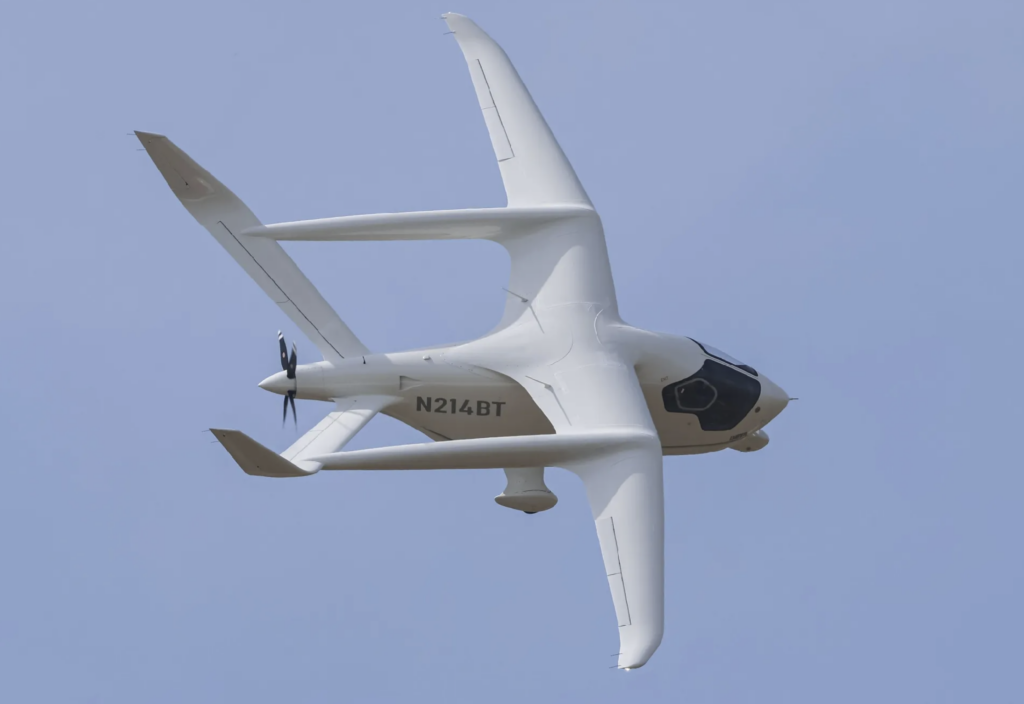
Beta, which is based in Vermont, is seeking to start in a similar market. The company is pitching its electric Alia aircraft — both a conventional and eVTOL model — as logistics and emergency medical vehicles. Costello says the company, which has placed more than 50 of their own eVTOL chargers in rural airports, wants to follow a stepwise approach, mastering the cargo and medical logistics market before carrying passengers.
If and when FAA certification arrives, Hirschberg believes the push to build out vertiports and their associated infrastructure will quickly accelerate; it’s not really a chicken-and-egg issue in terms of getting sites and approvals in place at the same time, more like a snowball rolling downhill. Once the first vehicles take flight, momentum will take off.
“This is not a hobbyist thing,” said Wainer. “There are large orders for these aircraft being placed by the Air Force and others. The question is, what benefit does it provide to the most people?”